Taking Off My Chainmail Boxers in the Kitchen
I’ve spent years asking women for a level of depth I wasn’t brave enough to give back.
I used to be the stoic one. Or, at least, I thought it was stoicism. Sometimes it’s repression wrapped up in an ego burrito. I thought that by sitting on my wants and staying “patient,” I was being a good man. I thought if I was just steady enough, eventually she’d soften, and I’d finally earn the right to see the version of her that only exists when she’s alone.
But I was wrong. Closeness isn’t a prize you unlock with good behavior.
When I was hiding my own needs to avoid a “No,” I was actually building a wall, not a bridge. It wasn’t intimacy; it was fear with good posture. I was asking her to undress her 𝘴𝘦𝘭𝘧 in front of me, while I was still standing there in chainmail boxers, pretending I was bare.
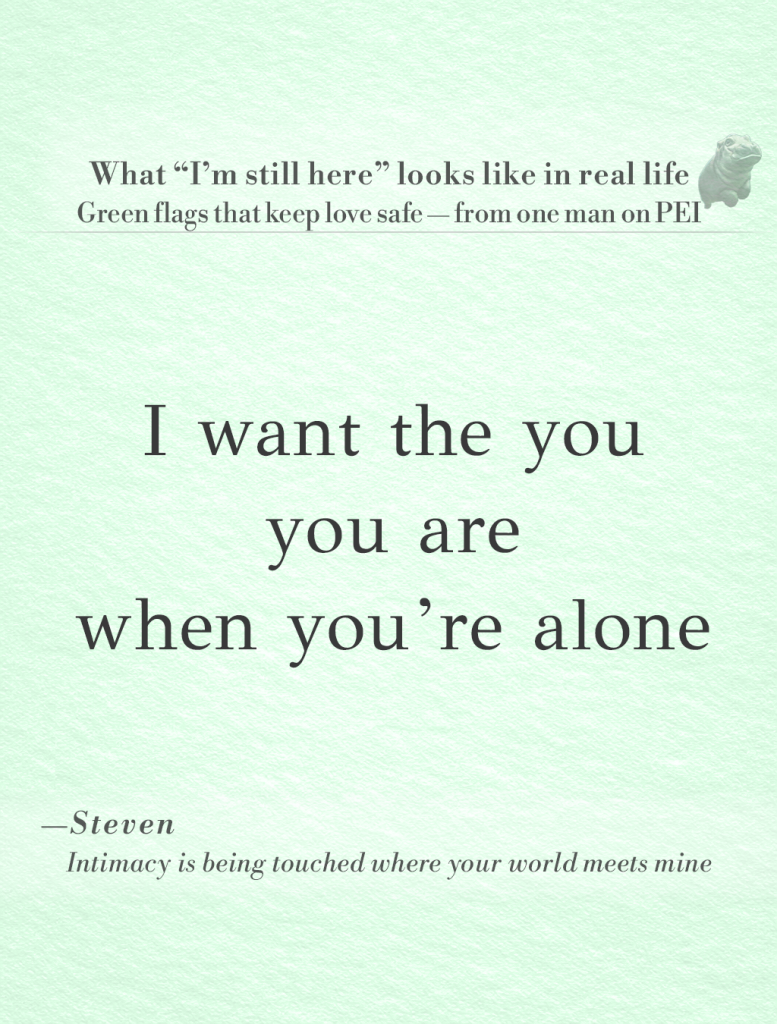
I want to build a room where neither of us has to perform. I don’t want a secret self I get to claim like a trophy. I want the woman who can finally exhale beside me—the one who doesn’t feel like she has to hold her stomach in or stay “on” while she’s tired.
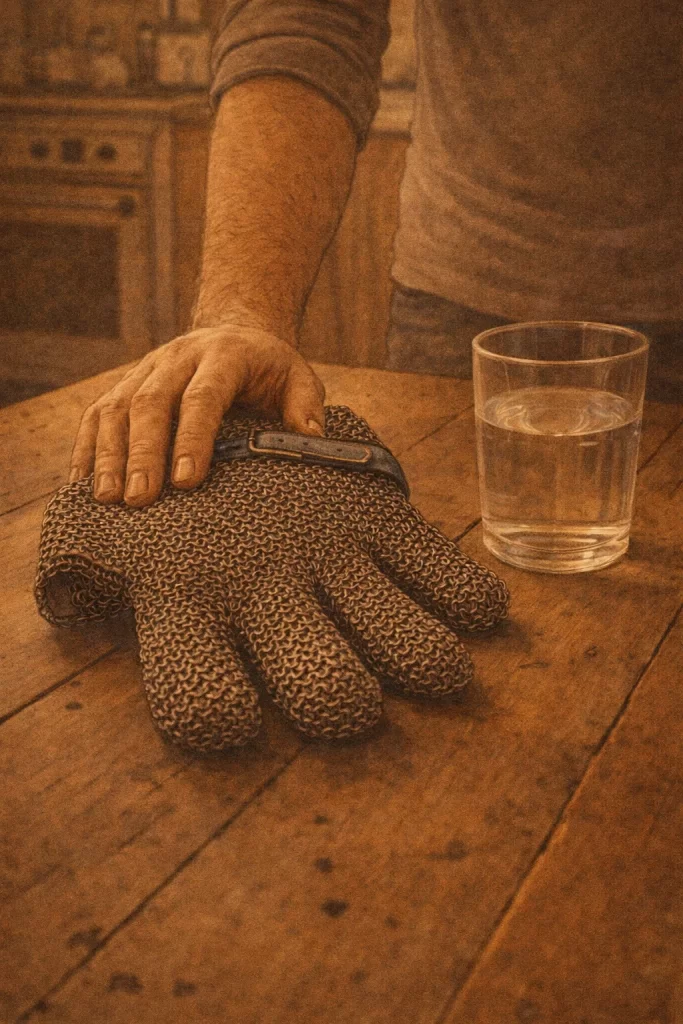
I want the version of you that can relax into the fact that I’m still here. I trust you to ask me for a glass of water if I go to the kitchen. What’s changed, is that I’ve realized that by not asking—by getting up and doing it all myself—I was stealing a trivial but meaningful way for you to show me you love me.
That’s not stoicism, that’s separation.
I’m no longer afraid of you knowing my wants.

Behind the Wires — Notes to Myself:
For a long time I thought closeness was something that mostly just jelled. Two people loved each other, slid down the same slope together, and eventually bumped into each other somewhere deeper.
That sounds romantic.
It’s also a bit of a fairy tale.
What I was actually doing in past relationships was quieter than that. I would sit on my wants. Speak around needs. Suppress things one instance at a time and call it patience. At the time it felt responsible—like I was keeping the relationship smooth by not making things difficult.
Looking back, it wasn’t steadiness. It was concealment.
Part of it was simple uncertainty. If I said I needed something and she said “no,” I didn’t really know what the next move was. The moment felt like a trap with only three exits: I submit, she submits, or the relationship fractures. None of those felt like love. So instead of learning how to navigate that middle ground, I avoided the moment entirely.
You can do that for quite a while without anyone noticing the exact shape of what’s happening.
But silence has a side effect. It blurs your edges. If you keep your wants hidden long enough, the person beside you can’t fully find you. They can feel you there, but they can’t quite see the boundaries of who you are or where you stand. And that isn’t really honesty, even when the intention behind it is gentle.
I understand that better now.
Take something small. If I’m thirsty and get up to get my own glass of water instead of asking you for one while you’re already headed to the kitchen, that looks like independence. Sometimes it is. But sometimes it’s me quietly removing a place where care could move between us. One small moment where relying on each other could have been visible.
That realization is part of why the idea of interdependence landed so strongly with me when I first came across it.
Not codependence. Not two people collapsing into each other. I mean something healthier than that: two capable people building a life where they can rely on each other because they’ve seen that the other person shows up. Not constant need. Not self-erasure. Just a real team.
A real unit.
I used to think intimacy was mostly about how much of yourself you were willing to reveal. Now I think it has more to do with the environment two people build together—whether the room they share makes it safe enough for those deeper parts to step forward naturally.
That changes things.
It means I don’t want to keep being “easy” in a way that hides me. I want to say what I want plainly without turning it into a demand. I want her to be able to hear it without feeling like she’s trapped in a tiny yes-or-no box. And I want both of us to stay in the conversation even when what we want doesn’t match perfectly.
That feels much closer to love than either silence or submission ever did.
The house I want to build now isn’t one where either of us has to guess our way toward the other person. It’s a place where we can relax into each other because neither of us is pretending we don’t have edges.